
Ante-Post Betting and Non Runner No Bet: How Early Odds Come with Real Risk
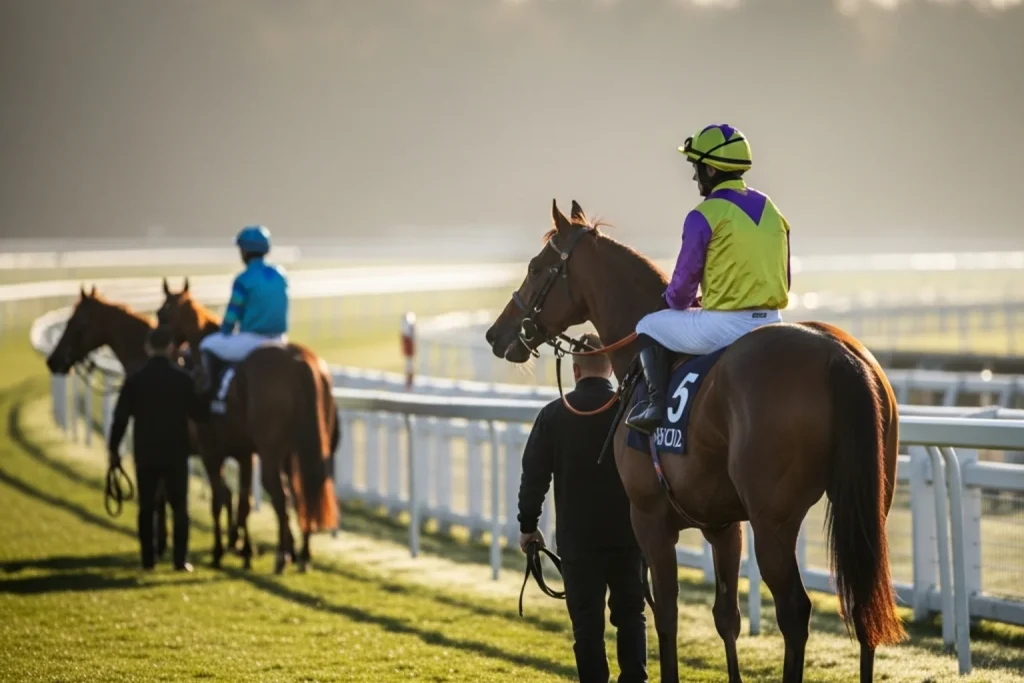
Non runner no bet ante post protection is the single most important consideration for anyone thinking about backing a horse weeks or months before a race. The logic of ante-post betting is seductive: you get bigger prices, you lock in value before the market tightens, and you feel like you’ve outsmarted the crowd. The catch — and it’s a significant one — is that if your horse doesn’t make it to the start line, your stake vanishes. No refund. No consolation. Just a gap in your betting account where your money used to be.
This isn’t a niche concern. According to the BHA Racing Report 2026, total betting turnover on British horse racing fell 6.8% year on year, with a cumulative decline of 16.5% compared to 2022. Part of that erosion traces directly to punters pulling away from ante-post markets where the risk of losing a stake to a non-runner feels disproportionate to the reward. It’s a rational response: why commit money weeks in advance when the horse might never run?
The only structural defence a bettor has is NRNB — non runner no bet — a promotional offer from selected bookmakers that guarantees a refund if your chosen horse is withdrawn before race day. Not every bookmaker extends NRNB to ante-post markets. Those that do typically restrict it to specific festivals, specific races, or specific time windows. Understanding where those protections exist, and where they don’t, is the difference between shrewd ante-post punting and an expensive lesson in small print.
This guide breaks down exactly how ante-post markets expose you to non-runner risk, maps out the withdrawal timeline from entry to start, compares which bookmakers actually offer NRNB protection on futures bets, and walks through real cases where bettors lost serious money to late withdrawals. Early odds, real risk — but risk you can manage, if you know where to look.
How Ante-Post Markets Work and Why Non-Runners Cost You
An ante-post bet is any wager placed before the final declarations stage — the point at which a horse is officially confirmed to run. In practice, that usually means you’re betting days, weeks, or even months ahead of the race. The bookmaker prices reflect this uncertainty: a horse trading at 8/1 ante-post might drift to 5/1 on race morning once the field is confirmed and the going is known. You’re being rewarded for taking on risk that day-of-race bettors don’t face.
The central risk is non-runner exposure. On a standard day-of-race market, if your horse is withdrawn, your stake comes back. That’s the default across every licensed UK bookmaker. Ante-post markets operate under different rules entirely. The horse doesn’t run, your bet loses. The bookmaker has already priced in the possibility of withdrawals when setting ante-post odds — that’s partly why the prices are longer. You’re effectively buying a ticket that becomes worthless if the event gets cancelled.
Consider the Grand National 2026. According to ThePuntersPage, 78 horses entered the race for just 34 available places. That’s an attrition rate between 56% and 65% once you factor in standard withdrawal patterns. If you back a horse in January for a race in April, the probability that your selection won’t even appear at Aintree is comfortably above 50%. Those are sobering numbers for anyone attracted by a double-figure price.
Bookmakers structure ante-post markets this way because the economics demand it. They’re offering longer odds as compensation for non-runner risk, and absorbing that risk back into their margin would make ante-post pricing unsustainable. The result is a two-tier system: day-of-race bettors get stake protection as standard, while ante-post bettors trade protection for price. NRNB promotions exist specifically to bridge this gap, but they remain voluntary offers — not industry rules.
Timing matters enormously. Most bookmakers define the ante-post period as anything before 10:00 on the day of final declarations — typically 48 hours before the race for Flat fixtures, and slightly different for National Hunt. A bet placed at 09:59 on declaration morning is ante-post. The same bet at 10:01 is day-of-race. Miss that threshold by two minutes and you’ve lost your automatic refund protection. It’s an arbitrary line, but it’s the line that determines whether you get your money back.
The psychological appeal of ante-post is also its trap. Finding a 20/1 shot three weeks before Cheltenham feels like discovering treasure. But that price exists precisely because there’s a meaningful chance the horse won’t run — due to injury, illness, going concerns, or simply a trainer’s change of plan. Ante-post value is real, but it’s not free. To understand just how many opportunities exist for a horse to fall out of a race, you need to trace the full withdrawal timeline.
From Entry to Start: When Horses Drop Out and What It Means
A horse’s journey from initial entry to the starting gate involves multiple stages, and at each one, there’s a door marked “exit.” Understanding this timeline is essential for anyone holding an ante-post bet, because each stage carries different implications for whether you’ll see a refund or simply see your stake disappear.
The process begins with entries. For major races, entries can close weeks or months before the event. The Grand National, for instance, typically receives initial entries in February for an April race. At this stage, connections — the trainer, owner, and their team — are expressing interest rather than making firm commitments. Horses can be entered in multiple races simultaneously, and being entered means nothing more than keeping options open. Backing a horse at this stage is pure speculation on intent.
Next comes the five-day confirmation stage, used for certain major handicaps and festival races. This is a preliminary declaration that narrows the field. Horses not confirmed at this stage are removed from the race, and any ante-post bets on them are lost. For many punters, this is the first painful filter — the horse you backed at 16/1 three weeks ago simply wasn’t confirmed, and your stake is gone.
The 48-hour declaration stage is where things sharpen. For most Flat races and many Jump meetings, trainers must confirm their runners by 10:00 two days before the race. This is the critical boundary between ante-post and day-of-race betting. Once your horse survives the 48-hour declaration, you’re on standard terms: if the horse is withdrawn after this point, your stake comes back under normal non-runner rules (or Rule 4 deductions apply if relevant).
Between 48-hour declarations and the race itself, horses can still be withdrawn — typically due to overnight injury, a deterioration in the going, or veterinary advice on race morning. These late withdrawals trigger standard non-runner protections. Your stake is returned, though if you’ve bet on a day-of-race market, any remaining runners’ odds may be adjusted via Rule 4.
Going conditions deserve a special mention. A horse trained specifically for soft ground may be withdrawn on the morning of a race if the going turns good-to-firm overnight. Trainers protecting their horses from unsuitable surfaces is entirely rational from a welfare and career perspective, but for ante-post bettors it’s another variable outside their control. The going report — published and updated by the racecourse’s clerk of the course — becomes essential reading in the final 48 hours. A change in the going description from “good to soft” to “good” on the morning of a race can trigger multiple withdrawals in a single card.
Finally, there’s the start itself. A horse can refuse to enter the starting stalls or behave in a way that prevents a fair start. Historically, this created a grey area: was the horse technically a runner or not? The BHA clarified this with a rule change in May 2026, expanding stewards’ powers to declare a horse a non-runner at the stalls. Since October 2026, the same rule applies to Jump races at the tape.
The overall trend behind this timeline is one of shrinking fields. The BHA Racing Report Q3 2026 confirmed that the number of horses in training has been declining at roughly 1.5% per year since 2022. Fewer horses in training means smaller pools from which to fill race fields, which in turn increases the probability that any given ante-post selection won’t make it to the start. For bettors, the withdrawal timeline isn’t just an administrative process — it’s a series of elimination rounds that your selection has to survive before you even get to watch it race.
Which Bookmakers Extend NRNB to Ante-Post Markets?
Not all NRNB offers are created equal, and the distinction matters most in ante-post markets — where the standard rules offer you nothing if your horse withdraws. Several major UK bookmakers extend NRNB protection to selected ante-post bets, but the terms vary considerably. Knowing which bookmaker covers what, and under which conditions, can save you from the most common ante-post pitfall.
Bet365 offers NRNB on ante-post markets for selected major festivals, including Cheltenham and the Grand National meeting at Aintree. The offer typically activates a set number of weeks before the festival and applies to win-only singles. Refunds are credited as free bets rather than cash, which reduces their real value — a £50 free bet returned on a non-runner is worth roughly £35–£40 in practical terms, because the stake isn’t included in any subsequent winnings from that free bet.
Paddy Power has historically been one of the more generous operators on ante-post NRNB. Their festival-specific promotions tend to cover a wider range of races and often include each-way bets as well as win-only markets. The refund mechanism has varied between cash and free bets depending on the specific promotion, so checking the terms before placing is essential.
William Hill typically runs ante-post NRNB as a time-limited promotion tied to specific festivals. Coverage tends to focus on the biggest races — Champion Hurdle, Gold Cup, Grand National itself — rather than blanket coverage of every race on a festival card. Sky Bet and Ladbrokes follow a similar model: selective coverage, festival-dependent, with refunds usually returned as free bets.
Coral and Betfair Sportsbook also offer ante-post NRNB on selected events, though the depth of coverage varies year to year. BoyleSports tends to be more aggressive with NRNB offerings on Irish-trained horses at Cheltenham, reflecting their customer base.
The market context explains why these promotions exist — and why they’re expanding. With horse racing betting turnover in sustained decline — down 16.5% over two years according to the BHA Racing Report — bookmakers are using NRNB as a customer acquisition and retention tool: a way to coax hesitant punters back into ante-post markets by removing the non-runner sting. It’s a calculated trade-off — the cost of occasional refunds is outweighed by the increase in ante-post betting volume.
A few critical details to check before you assume you’re covered. First, opt-in requirements: some bookmakers require you to tick a box or use a specific link to activate NRNB on your ante-post bet. Place the bet through the standard route and the protection may not apply. Second, minimum odds thresholds: some promotions only cover horses priced at 3/1 or longer, excluding short-priced favourites. Third, market restrictions: NRNB might apply to outright win markets but not to place betting, specials, or match bets.
The most reliable approach is straightforward: before placing any ante-post bet, go to the bookmaker’s promotions page, find the specific NRNB offer for the festival or race in question, and read the terms. Screenshot them if you’re betting significant sums. Promotions can be updated or withdrawn, and having a record of the terms at the time you placed your bet protects you in any dispute.
Real Losses: When Ante-Post Bettors Paid the Price
Theory is useful. Real losses are instructive. The past few years of UK racing have delivered multiple high-profile cases where ante-post bettors absorbed significant financial damage because their selections were withdrawn — and they didn’t have NRNB protection in place.
The most devastating recent example came in early 2026, when trainer Nicky Henderson withdrew seven horses from the Cheltenham Festival due to illness in his yard. The affected runners included Constitution Hill, a two-time Champion Hurdle winner and one of the most heavily backed horses in ante-post markets, along with Shishkin and several other high-profile entries. According to Oddschecker, Henderson’s estimated losses in prize money alone were approximately £1.3 million. For bettors, the damage was spread across thousands of individual ante-post bets, many placed months in advance at prices that reflected the perceived certainty of these horses running.
The financial mechanics are worth unpacking. Suppose you backed Constitution Hill at 4/5 for the Champion Hurdle in January 2026, placing a £100 stake. When Henderson confirmed the withdrawal in March, your £100 was gone — no refund, no consolation, no Rule 4 adjustment. If you’d placed that same bet on race morning after declarations, a withdrawal would have triggered an automatic full refund. The timing of your bet, not its quality, determined the outcome.
The Galopin des Champs withdrawal at Cheltenham 2026 offered another sharp illustration. The two-time Gold Cup winner was a standout ante-post favourite when trainer Willie Mullins confirmed his absence roughly a week before the race. As Mullins explained to ESPN: “After working very well on Thursday morning, he wasn’t right on Friday morning and will miss the Gold Cup and the other spring festivals.” For ante-post bettors who had backed Galopin des Champs at prices as short as 5/2, the withdrawal wiped out their stakes entirely. Those who had placed bets with bookmakers running NRNB promotions on the Gold Cup received refunds — either as cash or free bets depending on the operator.
These cases share a common pattern. The horses withdrawn are often the most popular selections — the ones attracting the highest volume of ante-post money. That’s partly mathematical (favourites concentrate betting activity) and partly circumstantial (star horses tend to be trained to peak fitness for specific targets, making them more susceptible to setbacks in the final preparation phase). The result is that non-runner losses aren’t evenly distributed across the market. They cluster around the biggest names, affecting the largest number of bettors simultaneously.
A rough calculation puts this in perspective. If 10,000 punters each staked an average of £25 on Constitution Hill ante-post in 2026, the total exposure was £250,000 — lost in a single announcement. Scale that across seven Henderson runners and multiple betting accounts, and the aggregate losses for bettors without NRNB protection ran comfortably into seven figures. It’s money that didn’t need to be lost, because the protection existed. It just wasn’t universal, and many bettors didn’t think to check whether their bookmaker was offering it.
Hedging Ante-Post Risk Beyond NRNB
NRNB is the cleanest form of protection — but it isn’t always available. Some races, some bookmakers, and some time windows fall outside NRNB coverage. When that happens, you’re not entirely defenceless. Several hedging strategies can reduce your ante-post exposure, though none of them are as simple as a refund.
The most direct hedge is a lay-off on a betting exchange. If you’ve backed a horse at 10/1 with a bookmaker and want to protect against a withdrawal, you can lay the same horse on Betfair Exchange for a smaller amount. The lay bet wins if the horse doesn’t run (or runs and loses), offsetting some of your ante-post stake. The cost is that you reduce your net profit if the horse wins. Getting the lay stake right requires some arithmetic: you’re essentially paying a premium to insure your bet, and the price of that insurance rises as the horse’s odds shorten.
Here’s a simplified example. You back Horse A at 10/1 with a £50 stake via a bookmaker, giving you a potential return of £550 (£500 profit plus your £50 stake). To hedge, you lay Horse A on the exchange at 12.0 for a £10 lay stake. If Horse A is withdrawn, you lose your £50 bookmaker stake but collect roughly £10 from the settled lay. If Horse A runs and wins, your exchange lay costs you around £110, but your bookmaker bet pays £550 — a net profit of roughly £390 instead of £500. You’ve sacrificed some upside to insure against the worst case. The exact figures depend on exchange commission and the lay odds available, but the principle is consistent: partial insurance at a known cost.
A second approach is Dutch betting — spreading your stake across two or three horses in the same race with different bookmakers, choosing only those offering NRNB. If one horse is withdrawn, the NRNB refund reduces your overall loss. If the remaining selections run, you’ve diversified your exposure. This works best when there’s no single standout favourite and the prices across several contenders offer genuine value.
Monitoring trainer news is less a hedging strategy and more a risk management discipline. Follow the key racing media — Racing Post, At The Races, the BHA’s official updates — for any signals about your selected horse’s preparation. Trainers often give coded interviews: a comment about “not being 100%” or “waiting to see how the ground develops” can be an early warning that a withdrawal is coming. If you pick up those signals early enough, you can lay off your position before the market adjusts.
The 48-hour declaration window deserves particular attention. If your horse survives the final declaration stage, your ante-post risk effectively ends — the bet transitions to day-of-race terms. Some experienced ante-post bettors specifically target horses whose training reports suggest high confidence in running, placing their bets early enough to capture the price advantage but close enough to declarations to reduce the exposure window.
One approach that doesn’t work: waiting for a refund that isn’t coming. If your bookmaker doesn’t offer NRNB on a particular race, no amount of complaint or appeal will produce a refund after a non-runner. The terms were set when you placed the bet. Hedging is something you do before the withdrawal happens, not after. The time to think about protection is when you’re reaching for your wallet, not when you’re watching a trainer’s press conference explaining why your horse isn’t running.
Ante-post betting isn’t a flaw in horse racing’s structure — it’s a feature. The longer odds reward patience, market reading, and conviction. But that reward comes bundled with a genuine risk that standard day-of-race betting doesn’t carry. When a horse is withdrawn from an ante-post market, the default position is: you lose. No refund, no Rule 4 adjustment, no second chance.
The tools to manage that risk exist. NRNB promotions from selected bookmakers cover specific festivals and races, returning your stake if your horse doesn’t run. Exchange lay-offs, Dutch betting, and attentive monitoring of trainer signals all offer additional layers of protection. None of them are complicated. All of them require you to act before the withdrawal happens, not after.
The market is shifting. Bookmakers are expanding NRNB coverage in response to declining turnover, and bettors are becoming more selective about where they place ante-post stakes. That’s a healthy dynamic. But the fundamental principle hasn’t changed: early odds come with real risk, and the punter who acknowledges that risk — and builds protection into their approach — is the one who survives the inevitable withdrawals and still comes out ahead over a season of racing.