
Non Runner No Bet at Royal Ascot 2026: The Flat Bettor’s NRNB Guide
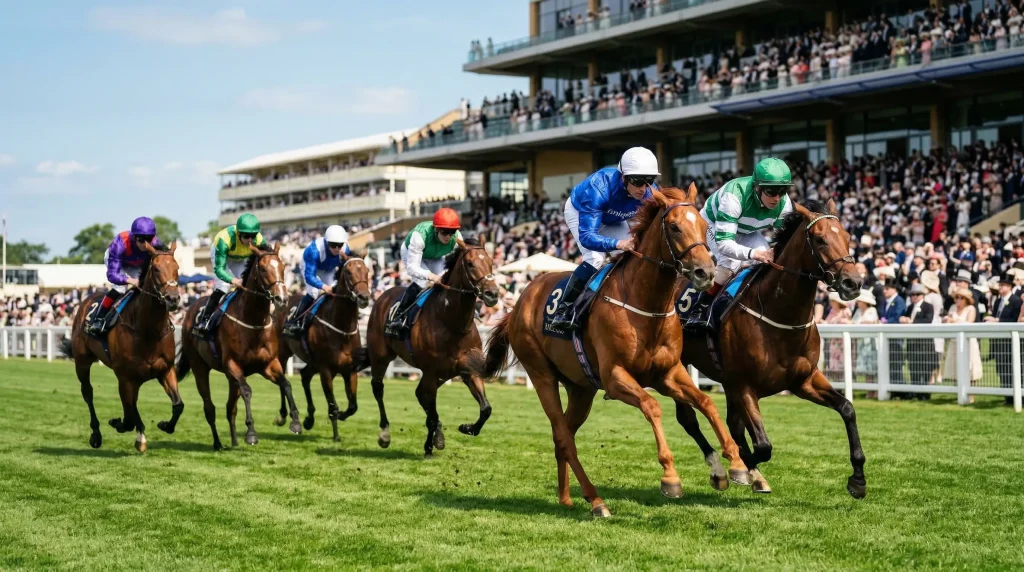
Non runner no bet at Royal Ascot sits in a different context from the Jump season offers that dominate the NRNB conversation. Cheltenham and the Grand National attract most of the attention — and most of the ante-post risk — because National Hunt racing has larger fields, longer ante-post windows, and a higher volume of late withdrawals. Royal Ascot is Flat racing’s flagship, and the non-runner dynamic here follows its own patterns.
The five-day meeting in June is the single biggest Flat fixture in the British calendar, featuring Group 1 races with international runners, handicaps with fields of 20 or more, and a betting market that draws in punters who may not touch a horse racing bet for the rest of the year. According to Gambling Commission data, horse racing betting participation nearly doubles during the spring-to-summer festival window, reaching 7% of the adult population between April and July. Royal Ascot sits at the heart of that spike, and the availability of NRNB protection for ante-post bets on the meeting matters to a large and diverse audience.
Flat season’s flagship, with NRNB on the card — but not always on every bookmaker’s card, and not always on the terms you might expect.
NRNB at Royal Ascot 2026: Which Bookmakers Cover It
The major UK bookmakers — bet365, Paddy Power, William Hill, Ladbrokes, Coral, Sky Bet, and Betfair Sportsbook — have all offered NRNB at Royal Ascot in recent years, but the scope and consistency vary more than at Cheltenham or the Grand National. Some operators cover the full five-day card. Others restrict NRNB to feature races (the Group 1 contests) or to the first four days, excluding the Saturday card where the field sizes and market volatility are highest.
The ante-post window for Royal Ascot is typically shorter than for the Jump festivals. While Cheltenham ante-post markets open months in advance, Ascot markets tend to solidify in the weeks rather than months before the meeting. This compressed timeline reduces the raw probability of a non-runner — there is less time for injuries, going changes, and tactical redirections to remove your horse from the race. But it also means the NRNB promotional window is shorter, and some bookmakers may not announce their Ascot NRNB until two or three weeks before the meeting.
Refund types at Ascot follow the same split as other festivals: some operators refund in cash, others in free bets. The terms are published individually for each festival and should not be assumed based on what the same bookmaker offered at Cheltenham. A bookmaker that gave cash refunds on the Champion Hurdle may offer free bet refunds on the Gold Cup at Ascot — or vice versa. Checking the specific Royal Ascot NRNB terms on your operator’s site before placing is the only way to be certain.
One area where Royal Ascot NRNB differs from the Jump festivals is in international runner coverage. Ascot attracts significant overseas entries — particularly from Ireland, France, and Australia — and these horses carry a higher withdrawal risk due to travel logistics, quarantine requirements, and going-surface preferences that may not be confirmed until days before the race. Whether your NRNB covers an international entry that withdraws depends on the promotion’s terms. Most do, but some operators have historically excluded supplementary entries or late additions to the card.
Non-Runners in Flat Racing: How Patterns Differ from Jump Season
The non-runner profile at Royal Ascot is structurally different from Cheltenham or Aintree. Jump racing loses horses to injury, illness, and going conditions at a higher rate because the sport is physically more demanding — fences and hurdles increase the risk of training setbacks, and soft winter ground creates more going-related scratches. Flat racing, by contrast, operates on firmer surfaces with lower attrition rates.
The BHA Racing Report for 2026 showed that the number of individual runners on the Flat actually increased by 0.5%, while Jump racing saw a 3% decline, according to the BHA’s annual data. This divergence means that Flat fields are, on average, slightly healthier and more stable than their Jump equivalents — which in turn means non-runner rates at Flat meetings like Ascot tend to be lower.
However, lower does not mean zero. Going conditions at Ascot are the primary trigger for Flat non-runners. The course can ride anywhere from heavy to firm depending on the weather in June, and a horse trained specifically for fast ground may be withdrawn if persistent rain softens the surface. Trainers of high-value Flat horses — Group 1 contenders worth millions in breeding rights — are more cautious about risking injury on unsuitable ground than their National Hunt counterparts, who expect variable conditions as part of the sport.
The result is a non-runner pattern at Ascot driven more by going changes and tactical repositioning than by injury or illness. A trainer may withdraw a fancied runner not because the horse is unfit but because conditions don’t suit, preferring to wait for a later meeting. For bettors, this means monitoring the going reports in the week before Ascot is the single most useful habit for predicting which horses might not make it to post.
Key Royal Ascot Races and NRNB Availability
Royal Ascot’s programme features eight Group 1 races across the five days, and these headline contests attract the deepest ante-post markets. The Gold Cup (2m 4f) over the staying distance, the Prince of Wales’s Stakes (1m 2f), the Queen Anne Stakes (1m) on opening day, and the Diamond Jubilee Stakes (6f) on the final Saturday are among the most heavily bet races in the Flat calendar.
NRNB availability is typically strongest on these marquee races. Bookmakers recognise that punters are most likely to bet ante-post on Group 1 events and that the promotional value of NRNB is highest where the stakes — both literal and reputational — are largest. If a bookmaker offers NRNB at Ascot but limits the coverage, the Group 1 races are almost always included.
The big-field handicaps — the Royal Hunt Cup, the Wokingham Stakes, the Britannia — present a different picture. These races regularly attract 20 to 30 runners, which makes them fertile ground for non-runners as trainers respond to the draw, the going, and the final handicap marks. NRNB on handicaps is less consistently offered, partly because the ante-post market for handicaps is thinner (fewer punters bet weeks ahead on a 20-runner handicap) and partly because the non-runner risk is more diffuse across a larger field.
For bettors who focus on the heritage handicaps, the practical approach is to assume NRNB does not cover these races unless explicitly stated, and to check declarations on the morning of the race rather than relying on an ante-post position. The handicaps are where Ascot’s non-runner rate is highest, but they are also where NRNB protection is least likely to be available.
Flat season’s flagship, with NRNB on the card — but the card has fine print. Royal Ascot’s lower baseline non-runner rate compared to the Jump season means the protection is needed less often, but when it is needed, the stakes are high. Group 1 ante-post bets on horses worth millions in breeding value are exactly the bets where a going-related withdrawal can leave you empty-handed. Securing NRNB on those bets is the simplest insurance available — and the terms are worth reading before you commit your stake.