
Non Runner No Bet Cheltenham 2026: NRNB Protection for Every Race at the Festival
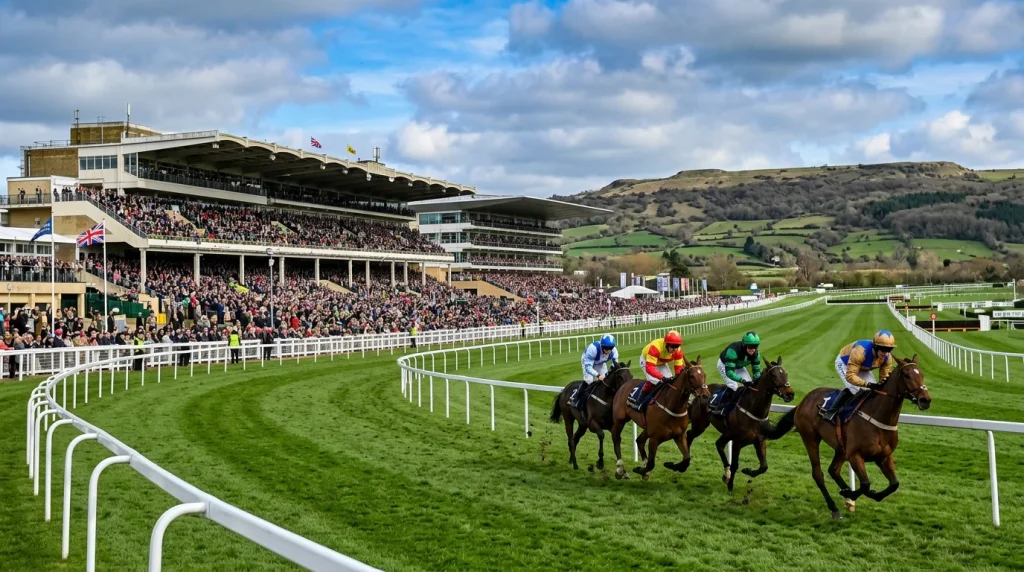
Non runner no bet Cheltenham 2026 is not a luxury — it’s a baseline requirement for anyone staking money on the Festival’s ante-post markets. Four days, 28 races, the deepest fields in National Hunt racing, and a long, well-documented history of star horses being pulled out in the final days before the meeting. Cheltenham generates more ante-post betting activity than any other Jump fixture on the British calendar, and consequently more non-runner pain when things go sideways.
The 2026 Festival has already provided its own headline withdrawal before the first race has been run. Galopin des Champs, the two-time Gold Cup winner, was scratched roughly a week before the race. Constitution Hill, a serial absentee from recent festivals, was also declared a non-runner. For bettors who placed ante-post stakes on either horse without NRNB protection, those withdrawals meant total loss of stake — no refund, no Rule 4, nothing.
This guide maps the full NRNB landscape for Cheltenham 2026: which bookmakers are offering protection, which races are covered, where the timing thresholds sit, and how to structure your ante-post approach to maximise coverage. Whether you’re targeting the Gold Cup, the Champion Hurdle, or a competitive handicap buried in the middle of Wednesday’s card, the principles are the same — but the coverage isn’t. Four days, 28 races, one rule that matters.
Cheltenham 2026 NRNB Coverage: What Bookmakers Are Offering
The NRNB promotional landscape for Cheltenham 2026 follows a familiar structure: most major bookmakers extend ante-post non-runner protection for the Festival, but the scope, timing, and terms vary between operators in ways that directly affect your level of coverage.
Bet365 typically activates Cheltenham NRNB several weeks before the Festival, covering ante-post singles on selected races. Their coverage has historically focused on the championship events — Champion Hurdle, Queen Mother Champion Chase, Stayers’ Hurdle, and Gold Cup — with supporting races sometimes included depending on the promotional cycle. Refunds are usually credited as free bets. The NRNB activates automatically for eligible bets without an opt-in requirement, which reduces the risk of accidental non-coverage.
Paddy Power runs one of the broader Cheltenham NRNB promotions, often covering all 28 races on the card rather than just the feature events. Their campaigns frequently include each-way eligibility, which is a meaningful advantage given the number of bettors who use each-way as their default ante-post format. Refund type has varied between promotions — check the specific terms for the 2026 campaign. Opt-in may be required.
William Hill, Ladbrokes, and Coral follow a similar pattern: NRNB on selected championship and major handicap races, with refunds as free bets and coverage windows opening approximately four to six weeks before the Festival. Sky Bet tends to focus coverage on the biggest races on each day’s card. Betfair Sportsbook offers selective Cheltenham NRNB, typically announced closer to the event. BoyleSports can be particularly competitive on Cheltenham ante-post coverage, reflecting the strong Irish contingent that dominates the Festival entries.
The financial scale of the Festival explains why bookmakers invest in these promotions. Cheltenham’s total prize fund reached £4.93 million in 2026, with the Gold Cup and Champion Hurdle commanding the largest shares. The volume of ante-post betting activity generated by those prizes — and by the prestige attached to the meeting — makes Cheltenham the single most important promotional period in the racing calendar for most operators. NRNB coverage is a customer acquisition tool, but it’s also a retention mechanism: bettors who receive a refund on a non-runner at Cheltenham are more likely to stay with that bookmaker for subsequent festivals.
The key question for any Cheltenham ante-post bet isn’t whether NRNB exists — it does, at virtually every major operator — but whether the specific race, market type, and timing of your bet fall within the terms. A bet placed six weeks before Cheltenham on the Gold Cup might be covered; the same bet placed on a Wednesday handicap might not. Read the promotion, confirm the coverage, and keep a record of the terms at the time you placed the bet. If you’re placing multiple ante-post bets across different races, check each one individually — a single bookmaker’s NRNB promotion may cover some of your selections but not others.
The Cost of Withdrawals: Cheltenham’s Most Expensive Non-Runners
Cheltenham’s withdrawal history reads like a catalogue of what-ifs for ante-post bettors. The Festival’s prestige means the biggest names in National Hunt racing target it months in advance — and the bigger the name, the larger the ante-post liabilities when something goes wrong in the final preparation.
The Henderson crisis of 2026 remains the most severe recent example. Nicky Henderson, one of the most successful trainers in Cheltenham history, withdrew seven horses from the Festival due to a respiratory illness sweeping his Seven Barrows yard. The casualties included Constitution Hill — the reigning Champion Hurdle hero and one of the most heavily backed ante-post horses in the meeting — alongside Shishkin, a former Arkle winner, and several other leading contenders. Oddschecker estimated Henderson’s potential prize money losses at approximately £1.3 million. For bettors, the damage was concentrated among those who had backed these horses ante-post without NRNB: every stake placed on a Henderson runner was lost in full, with no mechanism for refund under standard ante-post rules.
The 2026 Festival added another chapter before the first race. Galopin des Champs, the brilliant two-time Gold Cup winner trained by Willie Mullins, was withdrawn roughly a week before the race. Mullins told ESPN: “After working very well on Thursday morning, he wasn’t right on Friday morning and will miss the Gold Cup and the other spring festivals.” For bettors, the timing was particularly painful — a week before the race is too late for most ante-post exits but too early for the day-of-race protections to apply. Only those with NRNB coverage were made whole.
Constitution Hill’s story extends beyond 2026. The horse has been a serial withdrawal from festivals, missing multiple targeted appearances due to recurring fitness issues. For ante-post bettors, Constitution Hill represents a specific type of risk: a supremely talented horse with a documented pattern of non-completion. Backing him ante-post without NRNB is a bet not just on his ability but on his soundness — and the historical evidence suggests that’s a bet worth insuring.
The pattern across these cases is consistent: the horses most likely to be withdrawn are often the most popular ante-post selections. Favourites attract the largest share of ante-post money precisely because bettors trust their ability. When those favourites are scratched, the financial impact is concentrated among the largest number of punters. NRNB doesn’t prevent the disappointment of losing a fancied runner, but it does prevent the financial damage from compounding the emotional one.
The aggregate cost to bettors from Cheltenham non-runners is difficult to quantify precisely, because bookmakers don’t publish ante-post liability data by race. But a rough estimate based on market volumes suggests that each major championship withdrawal — a favourite scratched from the Gold Cup or Champion Hurdle — wipes out several hundred thousand pounds in ante-post stakes across the betting industry. The Henderson situation in 2026, involving seven runners across multiple races, likely generated aggregate losses in the low millions for bettors without NRNB protection. That figure alone justifies the time investment of checking which bookmaker offers the best non-runner coverage before committing to a Cheltenham ante-post bet.
Race-by-Race NRNB Availability at Cheltenham 2026
Cheltenham’s 28-race programme spans four days, with seven races each day. NRNB availability varies not just between bookmakers but between individual races on the card. Understanding which races tend to attract the strongest coverage — and which are often excluded — helps you plan your ante-post strategy around the protection that’s actually available.
Day One (Champion Day) features the Supreme Novices’ Hurdle, the Arkle Chase, and the headliner: the Champion Hurdle. The Champion Hurdle attracts near-universal NRNB ante-post coverage from major bookmakers. The Supreme and Arkle are typically included in broader Cheltenham NRNB promotions but may be excluded by operators that limit coverage to Grade 1 championship races. The supporting races on the card — the Mares’ Hurdle, the National Hunt Chase, and the two handicap events — receive patchier coverage, with some bookmakers including them and others limiting their promotion to the feature races.
Day Two (Ladies Day) centres on the Queen Mother Champion Chase, a two-mile showpiece that reliably generates heavy ante-post activity. NRNB coverage for the Champion Chase is standard across most operators. The Ballymore Novices’ Hurdle and the Brown Advisory Chase are typically included in broad Cheltenham NRNB offers. The Cross Country Chase, the Coral Cup, and the Grand Annual often sit in the grey zone — covered by some operators, excluded by others.
Day Three (St Patrick’s Thursday) includes the Stayers’ Hurdle, a three-mile championship race that draws committed ante-post betting from followers of staying hurdlers. Ryanair Chase occupies a similar tier. Both usually qualify for NRNB coverage. The Turners Novices’ Chase, Pertemps Final, and Plate are less consistently protected in ante-post terms, with coverage depending on the specific bookmaker’s promotional structure.
Day Four (Gold Cup Day) is the centrepiece. The Gold Cup itself commands the highest volume of ante-post betting of any race at the Festival, and NRNB coverage is universal among major operators. The Triumph Hurdle, County Hurdle, Albert Bartlett, and the other supporting races on Gold Cup day typically benefit from the broadest coverage of any day’s supporting card — partly because bookmakers extend their most generous terms for the final day, when promotional visibility is highest.
The practical takeaway is that championship races (Champion Hurdle, Queen Mother, Stayers’ Hurdle, Gold Cup) are virtually guaranteed NRNB coverage from every major bookmaker. Grade 1 supporting races (Supreme, Arkle, Ballymore, Turners, Ryanair, Triumph, Albert Bartlett) are covered by most but not all operators. Handicaps and conditions races are where coverage becomes inconsistent. If your ante-post strategy targets a handicap race — the Coral Cup, the County Hurdle, or the Plate — verify NRNB eligibility before placing your bet, because these are the races most likely to fall outside the promotion’s scope.
A useful approach is to compile your own coverage grid: list the races you plan to bet on, cross-reference with each bookmaker’s NRNB terms, and place your bets with the operator that covers the most races on your list. That five-minute exercise before a Festival can prevent a four-figure regret during it.
For bettors who specialise in handicaps — and there are many who prefer the larger, more competitive fields where value can be found at longer prices — the inconsistency of NRNB coverage creates a genuine tactical problem. The Coral Cup, with its typical field of 24 to 28 runners, generates substantial ante-post interest but may not be covered by an operator that restricts NRNB to Grade 1 championship events. One workaround is to hold accounts with multiple bookmakers and place each handicap bet with the operator whose NRNB terms cover that specific race. It’s not elegant, but it’s effective: the marginal effort of checking two or three bookmakers’ promotions pages before placing a bet is trivial compared to the cost of an unprotected non-runner on a £50 ante-post stake.
The volume of ante-post activity on Cheltenham handicaps has been growing in recent years, driven partly by the visibility of these races through media coverage and tip-sheet recommendations. As that volume grows, bookmakers face increasing pressure to extend NRNB coverage beyond the championship races. Whether the 2026 promotional cycle reflects that pressure varies by operator — but the trend is moving in the bettor’s direction.
When Cheltenham Markets Switch from Ante-Post to Day-of-Race
The transition from ante-post to day-of-race pricing at Cheltenham follows a well-defined sequence, and understanding it determines whether your bet carries full non-runner protection or leaves you exposed.
Ante-post markets for Cheltenham typically open months in advance. Prices are available from the summer onwards for the following March’s Festival, and they tighten as the event approaches. During this entire period, your bet is classified as ante-post: if the horse doesn’t run, your stake is lost unless you have NRNB coverage from a specific promotional offer.
The critical switchover occurs at the 48-hour declaration stage. For each day of the Cheltenham Festival, trainers must confirm their runners by 10:00 two days before the relevant race card. Once that deadline passes, the market transitions to day-of-race terms. Any bet placed after declarations close is automatically covered by standard non-runner rules: if your horse is withdrawn after declaration, your stake comes back in full.
The period between the 48-hour declaration and the race itself typically sees one or two further withdrawals per day — horses scratched on the morning of the race due to overnight issues or going concerns. These late withdrawals trigger standard non-runner refunds and, where relevant, Rule 4 deductions for bettors on remaining runners. From a timing perspective, a bet placed after 10:00 on Monday morning for a Wednesday race is a day-of-race bet with full protection; the same bet placed at 09:59 on Monday is ante-post and unprotected unless NRNB applies. The distinction is binary and the threshold is precise — there is no partial protection for bets placed in the hours around the declaration deadline.
The Festival context makes this timing more significant than at ordinary meetings. Cheltenham 2026 drew 218,839 racegoers across the four days — the lowest attendance in a decade, but still a substantial crowd generating enormous on-course and remote betting volume. Guy Lavender, Chief Executive of Cheltenham Racecourse, acknowledged the trend before the 2026 meeting: “We expect fewer racegoers in person this year than in previous years.” Even as physical attendance declines, online ante-post activity on Cheltenham continues to grow, which means the ante-post to day-of-race transition affects more bets and more money than ever before.
For practical purposes, the optimal timing for an NRNB-protected ante-post bet at Cheltenham is within the promotional window (typically four to six weeks before the Festival) but as close to the 48-hour declaration deadline as your price target allows. The closer you bet to declarations, the shorter the period during which your selection can be withdrawn without your knowledge. Conversely, the earlier you bet, the better the odds — but the longer you’re exposed to the risk of a withdrawal during the unprotected ante-post window.
Cheltenham NRNB Strategy: Timing Your Ante-Post Bets
Timing your Cheltenham ante-post bets is a balancing act between price, information, and protection. Bet too early and you capture the best odds but face the longest exposure to non-runner risk. Bet too late and you get the safest position but at compressed prices that may not represent genuine value. The sweet spot sits somewhere in the middle — and it shifts depending on the horse, the race, and the bookmaker’s NRNB promotional window.
A two-week window before the Festival is a reasonable default for most ante-post bets. By this point, the major training updates are available, the five-day confirmation stage for selected races has passed, and most bookmaker NRNB promotions are active. Odds have shortened from their early-season peaks but still offer a meaningful edge over the prices available after declarations. This window gives you a practical combination of value and protection.
Going reports deserve close attention in the final fortnight. Cheltenham’s going can change dramatically between the week before the Festival and the first race. A horse targeting soft ground may be vulnerable to withdrawal if the going dries out — and vice versa. Monitoring the official going report, published and updated by the clerk of the course, gives you an early signal about which runners might be at risk. Trainers frequently comment publicly on going preferences, and those comments are worth tracking. A trainer who says “we’ll take our chance on any ground” is a safer ante-post proposition than one who says “we need it soft.”
Trainer press conferences and media interviews in the final two weeks are your best proxy for withdrawal probability. Major yards typically give mid-week updates through Racing Post, ITV Racing, or their own social media channels. Look for specific language: “working well” and “on course” signal commitment, while “we’ll see how they are closer to the time” or “we have options” suggest a horse is not guaranteed to run.
Stacking NRNB with BOG creates the strongest possible ante-post position. If both features are active at your chosen bookmaker for your target race, you’re protected in two directions: if the horse doesn’t run, your stake comes back through NRNB; if the horse wins at a better starting price than you took, BOG pays you the higher amount. This combination effectively removes the two biggest objections to ante-post betting — non-runner risk and price risk — and leaves you holding a bet that can only be beaten on merit.
One final discipline: don’t chase confirmation bias. If you’ve placed an ante-post bet with NRNB and the horse’s preparation looks shaky in the final days, resist the temptation to add a second stake at shorter odds in the hope of “averaging down.” The NRNB protection covers your original bet. Adding more money on the same horse — potentially with a different bookmaker that doesn’t offer NRNB on that race — increases your exposure rather than reducing it. Trust the protection you’ve built into the first bet and let the race play out.
Cheltenham Festival is the most exhilarating — and the most treacherous — ante-post betting event in British racing. The prize money, the prestige, and the depth of competition attract both the best horses and the biggest bets. When those horses don’t make it to the start, the damage to unprotected bettors is substantial and immediate. Henderson’s 2026 withdrawals, the Galopin des Champs saga in 2026, and Constitution Hill’s recurring absences all tell the same story: non-runners happen at Cheltenham, they happen to the most popular selections, and they cost real money.
NRNB protection for Cheltenham exists at every major bookmaker. The question isn’t whether it’s available — it’s whether your specific bet, on your specific race, at your specific bookmaker, falls within the terms. Check the coverage, confirm the race eligibility, verify the refund type, and place your bet with the operator that gives you the strongest protection for the races you care about. Cheltenham rewards the prepared bettor, and in 2026, preparation starts with three letters: NRNB.