
Non Runner No Bet Grand National 2026: Entry Breakdown, NRNB Offers, and How to Protect Your Stake
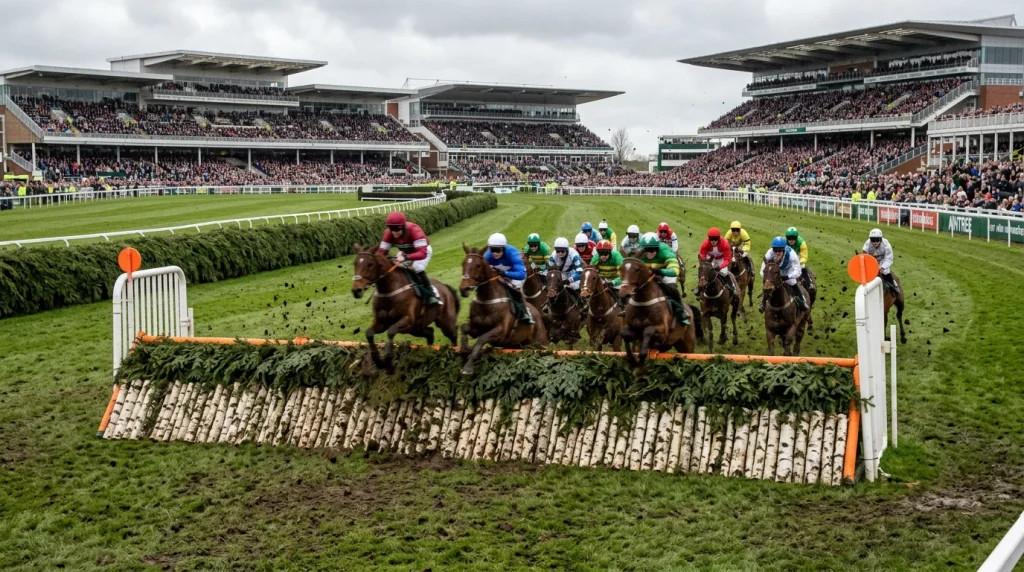
Non runner no bet Grand National protection matters more for this race than for any other event on the British racing calendar — and the numbers explain why. The 2026 Grand National attracted 78 entries for just 34 available places. That’s an immediate attrition rate of over 56% before you even account for the horses that enter but withdraw due to injury, going concerns, or trainer decisions in the weeks before the race. If you back a horse ante-post for the Grand National, the probability that your selection won’t line up at Aintree is higher than the probability that it will.
The Grand National is also the single most popular betting race in the world. Millions of casual punters place their once-a-year bet on the race, many of them weeks in advance, attracted by the spectacle and the long prices. Most of those bettors have never heard of NRNB and wouldn’t think to check whether their bookmaker offers it. When their horse doesn’t run, they discover — usually too late — that ante-post rules don’t include a refund.
This guide breaks down the Grand National’s entry and elimination process, compares NRNB offers from major UK bookmakers for the 2026 race, examines the historical patterns of non-runners at Aintree, and maps out a timing strategy for placing your ante-post bet with the strongest protection available. 78 entries. 34 places. Know your odds before the off.
The Grand National Entry Process: From 78 to 34
The Grand National’s entry process is the most complex in British racing, and understanding its stages is essential for anyone holding — or considering — an ante-post bet. The journey from initial entry to the starting tape at Aintree involves multiple elimination rounds, each of which removes horses from the race and converts ante-post bets on those horses into losses.
The process begins with initial entries, typically closing in early February. For the 2026 race, 78 horses were entered for 34 available places — a ratio that guarantees at least 44 horses, or 56% of the entry list, will not participate. Factor in the typical withdrawal rate among horses that do survive the balloting stages, and the overall non-runner rate climbs to between 60% and 65%. Those numbers make the Grand National the single highest-risk ante-post betting event in the UK calendar.
After initial entries, the British Horseracing Authority publishes the weights — the handicap marks that determine how much each horse carries. Weights publication is a critical moment because it forces connections to assess whether their horse has a realistic chance under its allotted weight. Horses given what trainers consider an unfairly high mark often withdraw at this stage, either forfeiting their entry or being redirected to alternative races with lighter weight conditions.
The first forfeit stage typically occurs in late February or early March. Connections must pay a fee to keep their horse in the race. Those who don’t pay are removed. This stage typically eliminates a significant portion of the entry list — horses that were entered speculatively, those with fitness concerns, or those whose connections have decided on alternative targets. For ante-post bettors, this is the first major culling event: a horse that doesn’t survive the first forfeit stage is gone, and so is your stake.
A second forfeit stage follows roughly two weeks later, reducing the field further. By this point, the surviving entries are genuine contenders, but the field still exceeds the 34-place limit. If more than 34 horses remain after the second forfeit, the race uses a balloting system: horses ranked lowest in the handicap are eliminated. Balloting is purely mechanical — it’s based on handicap rating, not form, preference, or commercial considerations. A horse that’s been backed heavily in ante-post markets can be balloted out if its rating falls below the cut-off. This is perhaps the cruellest outcome for an ante-post bettor: your selection was fit, willing, and ready to run, but it simply wasn’t rated highly enough by the handicapper to make the final field. Your money is gone, and nobody made a decision — it was just mathematics.
Final declarations close the process, typically 48 hours before the race. At this point, the field is confirmed and the race transitions to day-of-race betting terms. Any horse withdrawn after final declarations triggers standard non-runner protections — a full refund of your stake. The ante-post risk ends here, but for bettors who backed horses eliminated in earlier stages, the damage was done weeks or months ago.
The Grand National also operates a reserve system. Horses that fall just below the ballot line are listed as reserves, stepping in if a confirmed runner is withdrawn after final declarations. Reserves add a layer of complexity: a horse you backed at 25/1 might be listed as a reserve, technically still alive but only running if another horse drops out. Whether your bet is treated as ante-post (lost) or day-of-race (refunded) in this scenario depends on whether the horse was officially declared as a runner at the 48-hour stage.
Grand National NRNB Offers 2026: Bookmaker Comparison
Given the Grand National’s exceptionally high non-runner probability, most major UK bookmakers offer some form of NRNB protection on ante-post bets for the race. But the terms, timing, and depth of that coverage vary — and the differences can determine whether you receive a refund or absorb a total loss.
Bet365 typically runs a Grand National NRNB promotion covering ante-post singles, activated several weeks before the race. Refunds are credited as free bets. Coverage usually extends from a set date (often after the weights are published) through to the final declarations. Bets placed before the NRNB window opens may not be covered — check the activation date carefully if you’re betting early.
Paddy Power offers Grand National NRNB that often includes each-way bets and activates earlier in the cycle than some competitors. Their terms have historically been among the more bettor-friendly for this race, though specific conditions vary by year. Opt-in may be required.
William Hill, Ladbrokes, and Coral follow a broadly similar pattern: NRNB on the Grand National from a specified date, refunds as free bets, singles only in most cases. Sky Bet tends to be straightforward in its terms but may have a narrower activation window. Betfair Sportsbook offers Grand National NRNB as a promotional add-on, with timing typically closer to the race. BoyleSports can be particularly competitive given their strong Irish customer base and the significant Irish presence in Grand National fields.
The critical variable across all operators is the activation date. A bookmaker that opens NRNB coverage from the day after weights are published covers a much wider window than one that activates only in the final fortnight. For bettors who want to lock in prices early — when the longest odds are available — the bookmaker with the earliest NRNB activation date is the most valuable choice, even if its other terms are marginally less generous.
Refund type follows the same pattern seen across other festivals: free bets are the norm, cash refunds are rare. Given the Grand National’s long odds — most runners are priced at 14/1 or longer — the free bet penalty is relatively mild. A free bet on a 20/1 shot captures approximately 95% of its face value, so the difference between a cash refund and a free bet refund is less significant here than in shorter-priced markets. Still, cash is always preferable, and bettors with a choice between operators should factor it in.
One Grand National-specific consideration: the reserve system. If your horse is initially declared as a reserve and then enters the field as a confirmed runner after another horse’s withdrawal, your ante-post bet is live. But if your horse remains a reserve and never officially enters the race, the NRNB terms may or may not cover it. Some bookmakers treat a balloted-out horse as a non-runner for NRNB purposes; others treat it as an eliminated entry, which falls outside the promotion. This is a grey area worth clarifying with your bookmaker before placing the bet.
Grand National Non-Runner Patterns: What History Tells Us
The Grand National has always produced non-runners at a higher rate than any other British race, and the trend over the past five years confirms that this is a structural feature of the event rather than an anomaly. The combination of a massive entry list, a unique course with singular demands, and a balloting system that mechanically eliminates horses means that non-runner attrition is built into the race’s DNA.
In a typical year, between 60% and 70% of initial entries fail to make the final field. Some are eliminated through balloting, others through forfeit stages, and a further group through late withdrawals on veterinary advice, going concerns, or trainer decisions. For ante-post bettors, every one of those exits represents a lost stake — unless NRNB protection was in place at the time of betting.
The broader market context intensifies the issue. Horse racing betting turnover has fallen sharply in recent years, according to the BHA Racing Report 2026 — down 16.5% over two years. Part of that decline reflects bettors pulling away from high-risk ante-post markets where the probability of a non-runner exceeds the probability of participation. The Grand National, with its extreme entry-to-places ratio, sits at the apex of that problem.
The seasonal dimension reinforces the Grand National’s importance. According to the Gambling Commission’s participation survey, horse racing betting involvement jumps from 4% in winter to 7% during the April-to-July period — a window that captures the Grand National in early April. That surge in participation means millions of once-a-year punters enter the market specifically for this race, many of them unfamiliar with ante-post rules and the concept of non-runner risk. They represent the most vulnerable segment of the betting population when withdrawals occur.
Richard Wayman, BHA’s Director of Racing, has been direct about the challenges facing the broader market. Commenting on the turnover decline, he stated that he had no doubt the drop in betting revenue was driven primarily by the impact of affordability checks, which were pushing people either to stop betting or to move to unlicensed operators. While affordability checks are a distinct issue from non-runner risk, the two intersect in a meaningful way: a shrinking pool of active bettors makes each lost stake to a non-runner more significant to the individuals affected, and the perception of ante-post risk — particularly on the Grand National — contributes to the broader reluctance to engage with horse racing betting.
The historical pattern is clear and unlikely to change. The Grand National will always produce more non-runners than almost any other race. Bettors who accept that reality and build NRNB protection into their approach treat the non-runner rate as a known variable rather than a nasty surprise. Those who don’t learn the lesson after one lost stake usually learn it after two.
Safety and Welfare Rules That Affect Grand National Non-Runners
The Grand National has undergone more safety-related modifications than any other race in British racing over the past two decades, and several of those changes directly affect the non-runner landscape. The reduced maximum field size, enhanced veterinary inspections, and course modifications all interact with how horses qualify for and ultimately participate in the race.
The maximum field was reduced from 40 to 34 runners following a series of safety reviews. That reduction, while positive for horse welfare, increased the proportion of entries that become non-runners. With 78 entries for 34 places in 2026, the elimination rate starts at 56% before any individual withdrawal decisions. In a 40-runner era, the same 78 entries would have produced a 49% base elimination rate. The safety improvement for participating horses directly increases the non-runner rate for bettors.
Veterinary inspections at multiple stages of the entry process add another filter. Horses must pass veterinary assessments to remain in the race, and those assessments have become more rigorous in recent years. A horse that shows any sign of unsoundness during the pre-race inspection period can be withdrawn on veterinary advice — a decision that is final and non-appealable. For ante-post bettors, this is a positive development in terms of horse welfare but a negative one in terms of stake protection: it increases the probability of a late withdrawal that falls within the ante-post window rather than the day-of-race window.
The overall number of horses in training provides the broader context. According to the BHA Racing Report 2026, 18,452 horses started at least once during the year — a 1% decline from the previous year’s figure of 18,630. The Jump racing sector, which supplies Grand National entrants, has been particularly affected, with a 3% drop in individual starters. A shrinking population of Jump horses means more intense competition for fewer places, which in turn means more speculative entries and higher withdrawal rates through the forfeit stages.
Course modifications at Aintree — including changes to fence profiles, landing areas, and the starting procedure — have also evolved the race’s character in ways that influence non-runner decisions. Trainers now place greater emphasis on a horse’s suitability for the specific Aintree fences, and horses deemed unsuitable on jumping grounds may be withdrawn in favour of alternative targets. A trainer who entered a horse speculatively in February may decide by March that the going, the fences, or the competition make a different race a better option. That rational decision by the connections creates an irrational outcome for the ante-post bettor: a lost stake on a horse that never had a realistic chance of running.
When to Place Your Grand National Ante-Post Bet
Timing a Grand National ante-post bet involves balancing three competing factors: the odds you want, the NRNB protection you need, and the information available at the time of betting. Each stage of the entry process shifts the balance between these factors.
Betting immediately after initial entries close — typically in early February — captures the longest prices. A horse available at 33/1 in February might shorten to 16/1 by the final forfeit stage if positive training reports emerge. But February bets carry maximum non-runner exposure: the horse has to survive weights publication, two forfeit stages, potential balloting, and final declarations before your bet becomes live. If your bookmaker’s NRNB promotion hasn’t activated yet at this point, you’re fully exposed.
Betting after weights publication — usually late February — is a common compromise. By this stage, you know each horse’s handicap mark, which allows a more informed assessment of whether connections will keep the horse in the race. A horse given what the trainer considers a fair weight is more likely to proceed through the forfeit stages. The odds will have shortened slightly from the initial entry stage but remain significantly longer than they’ll be closer to the race. Crucially, many bookmaker NRNB promotions activate around the weights stage, so your bet picks up non-runner protection from the outset.
Betting after the second forfeit stage — roughly three to four weeks before the race — offers the best balance of protection and price certainty. By this point, the field has been substantially reduced, and the remaining horses are genuine contenders barring late setbacks. The odds are shorter, but the probability of your selection actually running is significantly higher. NRNB is almost certainly active, and the remaining risk window before final declarations is measured in weeks rather than months.
Combining NRNB with BOG creates the strongest ante-post position for the Grand National. Given the race’s long odds — most runners are priced at 14/1 or higher — the BOG element has the potential to deliver meaningful upgrades. A horse backed at 20/1 ante-post that starts at 25/1 on race day pays at the higher price under BOG. If the same horse were withdrawn, NRNB returns your stake. The combination addresses both price risk and non-runner risk simultaneously.
Monitoring the handicapper’s assessments and the going forecast deserves as much attention as price-watching. The Grand National’s unique demands — four miles, two furlongs, 30 fences — mean that going conditions have an outsized influence on participation. Soft ground suits some horses and discourages others; a shift in conditions in the final week can trigger multiple withdrawals. Following the Aintree going report through the official BHA and racecourse channels gives you an early signal about potential non-runners.
A practical rule of thumb: if your bookmaker offers NRNB on the Grand National from the point your bet is placed, bet when you see the price you want and let the protection do its job. If the NRNB window hasn’t opened yet, consider waiting until it does — even if the price shortens slightly. The cost of a few points of odds compression is almost always less than the cost of a lost ante-post stake on a horse that doesn’t run.
The Grand National is the most democratic betting race in Britain — millions stake their money, most for the only time all year, and the long odds make anyone feel like they have a chance. But it’s also the race where ante-post risk is highest, where the entry-to-places ratio guarantees mass non-runner attrition, and where uninformed bettors are most likely to lose their stake without understanding why.
NRNB protection exists specifically to solve this problem. Every major bookmaker offers some version of it for the Grand National, and the promotional terms are more accessible than many casual bettors realise. The work required is modest: check which bookmaker covers the race, confirm the activation date, verify the refund type, and place your bet within the protected window. That five-minute investment is the difference between absorbing a loss you didn’t expect and recovering a stake you can redirect.
78 entries, 34 places, and a guarantee that the majority of horses entered will never reach the start. The Grand National rewards the bold — but it respects the prepared. Make sure your ante-post bet comes with the one protection that matters.